
So we’ve been calling this a religion all over the place. And further to this, we’ve been ascribing definitions to the word religion you are probably not used to seeing so ascribed. So as a result, you likely have questions. And hopefully we have answers.
“Gods are a dream of humans. Humans are a dream of bacteria.”
-From the Ars Holistica
What is Religion?
What is religion? What is faith? The answer is many things to many people. but I want to narrow the focus a little bit for this conversation. Regarding faith, I want to limit the definition here to ideas which people as if they are true: ideas like “good will triumph over evil,” and “men are born sinful and require redemption.” I want to limit my discussion here to non-falsifiable claims of religion. I’m not interested here, in talking about belief in things that are provably false. I am not interested, at the moment, in discussing ideas such as young earth creationism. Physical evidence disproves youth earth creationism. Such faith is simply erroneous, and not what intrigues me. The ideas of capitalism and communism are non-falsifiable by contrast. They are ideologies built upon the faith that their beliefs produce the best future humanity can hope to achieve. And if both have, in practice, created worlds much less than the worlds the ideologies promised; well that just means that people failed to enact either capitalism or communism appropriately. All failed capitalist and communist states indicate a failure of those enacting the states rather than the ideologies themselves to those who believe in those ideologies. The faithful of capitalism and communism live as if their preferred ideologies were true, and seek to act in such a way that they can help to enact and embody their ideology into the world.
Religion as Role-Play
Now I want to shift gears for a moment. Role-playing has been a hobby of mine since I was a child. In a role-playing game, one acts as if the fictional world and rules of the role-playing game are true. The player knows that the world they are playing within is fictional, but they act as if it were real within the boundaries of the game. Religions and political ideologies do the same thing but extend the boundaries of the game to the whole of an adherent’s life. Does it feel as though I am reaching with this analogy? If you feel that I am reaching in making this analogy, I would ask if you believe that your particular religion or political ideology is definitely absolutely true? Because if you feel that your ideology is inerrant, this idea will probably feel heretical, blasphemous, or treasonous. What I am suggesting is a way to engage with an ideology, whether political or religious or cultural, which allows an adherent to remain open to the possibility that the ideology is fallible- the product of equally fallible human beings.
Why would I bother suggesting such a course of action? First, because it render the ideology more malleable. Such an ideology would be an ideology more amenable to editing and updating. Second, such an ideology would be more resistant to the creation of zealot factions, as such an ideology has the possibility that the adherent might be wrong built into the structure of its beliefs. Third, such an ideology would be more tolerant of other ideologies, again, because the possibility of adherent error is built into the ideology at the axiomatic level.
Interestingly, this idea also makes explicit the performative nature of both culture and ideology. Human social interaction is a collaborative performance. Modern culture tends to disdain the performative nature of social interaction and group dynamics. But since all social interaction is performative, people who show such disdain do so performatively themselves. I have read much about the true nature of humanity in our hearts of hearts. And I have concluded that I do no care what happens in the hearts of those around me. I care, instead, about how they perform. What do they do? How do they live among others. I am uninterested in whether they do it because they are innately moral people (whatever that means) or if they are playing a game in their own hearts. How do they act in relation to other beings? If we can effect a culture which nurtures life and treats its members well, then I am happy to act in such a play. Let us make believe if by making belief we make a better world.
Religion as Technology
I am obviously talking about religion here in a way that it not normally discussed. That is because I see religion differently. I see religion as human technology. Religion is social technology. It is informational technology. But it is still technology. Religion is a human invention, and outgrowth of how the human mind processes and retains information. The human mind has developed over two million years of natural selection. Our minds and our brains developed based upon how we lived and the strategies we developed to survive.
We travelled in small groups, and our minds adapted to recognize and remember human faces and the social connections associated with those faces. We were nomadic or semi nomadic for much of human evolution, and our minds developed to remember journeys and the events associated with the stages of those journeys. And from these things, we began to transmit information using those elements: people and journeys. We told stories.
And religion is what happens when stories are used to encode “a particular system of faith and worship,” or “a pursuit or interest to which someone ascribes supreme importance.” Religions are operating systems for the human minds. People choose or accept a religion. They install it. And then the religion assists and expands and shapes and limits their thinking. Religion is the mental equivalent of an Iron Man suit. Religion is Windows versus Apple versus Linux.
The lesson here, is not to mistake the technology for anything else. Religion is a technology. It exists to perform useful functions. If it ceases to do so, if it fails to do so, it should be amended. Or it should be discarded.
In Conclusion
I need to conclude by stressing that I am still mulling these ideas over as I write this. These words are speculation, my own ruminations as digital ink on the page. I may refine or dispose of these ideas in the days to come. Use this as inspiration and ideas to consider. But be brutal, cut it to pieces and see what survives. These thoughts are a journey, and not a destination, and may these roads lead you to interesting places.
FAQs
What is God?
We do not know, save that anything claiming to be god should not be trusted.
Are there any rational arguments for the existence of a god or gods?
The only place where Gods definitely exist is in stories, and thus also in the human mind.
Do religious experiences prove the existence of a god or gods?
Religious experiences prove that people experienced something, nothing more.
Do miracles exist? Do they prove there is a god or gods?
The definition of a miracle is so slippery as to be useless. We have seen no evidence for anything that violates the laws of nature.
How can there be a god or gods if there is so much evil in the world?
Even if there is a god, or gods, nothing says that such beings must be good.
Do souls exist?
We have seen no evidence of a soul that can be measured. But the delicate network of memories and experiences that make up your mind serves as a serviceable stand in.
Is there an afterlife?
Yes. We have no idea whether our consciousness lives on after death, and no reason to think that it does. But your story lives on. Death is the time when your story lives on in the minds of others. This is the only guaranteed afterlife.
Does religious belief need to be rational?
Religious belief is not rational, it is emotional. Religious belief is built from hundreds of generations of humans telling stories, until the most mental contagious parts became fixed. Religious belief is not rational, but it can be useful.
Does faith require reasons to believe?
We do not condone faith. We advocate for utility of belief. We do not care whether the fairy tale is real. We are if the fairy tale is useful.
Are religious beliefs based on truth?
Yes, but not on fact.
Can there be morality without religion?
Absolutely. Religion is a useful way of encoding morality, especially complicated or anti-intuitive moral ideas. Religion is also very good at justifying immorality and atrocity through the same techniques. So be wary of anyone completely convinced of the their righteousness due to their religious convictions.
What is the essence of religion?
Religion is an informational technology. A pre-scientific method of encoding information about the world and passing it on to future generations.
What makes religion important to people?
The world came with no instruction manuals. And humans were provided with no strategy guides for life. And so humans have had to build their own. That is religion. And since Mystery expands exponentially with every new discovery, there will always remain great swathes more questions than answers. Religion is how humans deal with Mystery.
Is the Song of Seven a real religion?
There is no such thing as a real religion. And there is no such thing as a fake religion.
Are your gods real?
Not in the way that you mean, no. That probably isn’t the answer that you were hoping to receive. They are stories, and stories are real as long as they are told. The stories they embody and the information those stories encode are important. And again, we do not care if the fairy tale is real. We care if the fairy tale is useful. Also, we don’t trust our gods, and prefer to deal with any of the Others save for the ones you claim the title of God.
Symbols of the Song
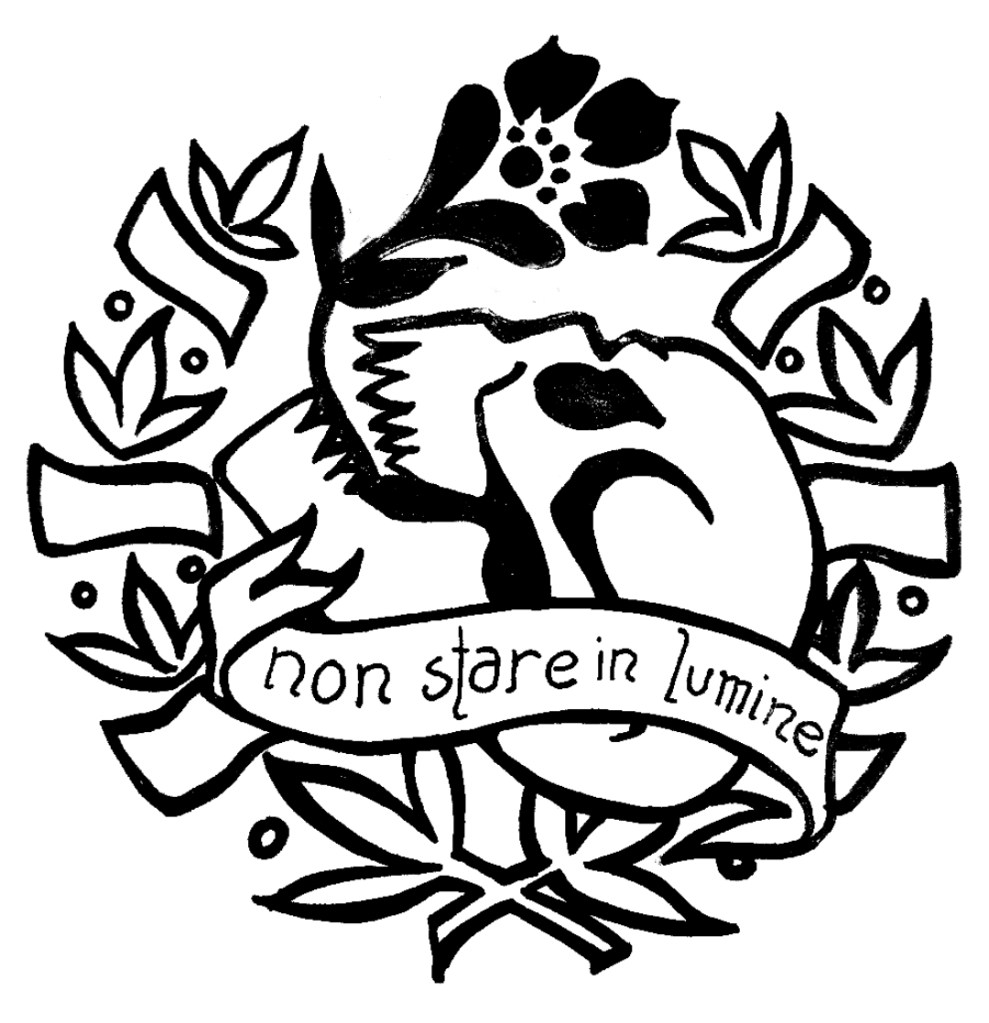
- The Flame is possibly the most important symbol to the Song. The flame symbolizes the story, the creativity of life, the essence of hope. The flame is the heart of the Song of Seven. The flame itself is often symbolized as The Firebird, sometimes referred to as Mystery the Fire Bird, or simply Mystery.
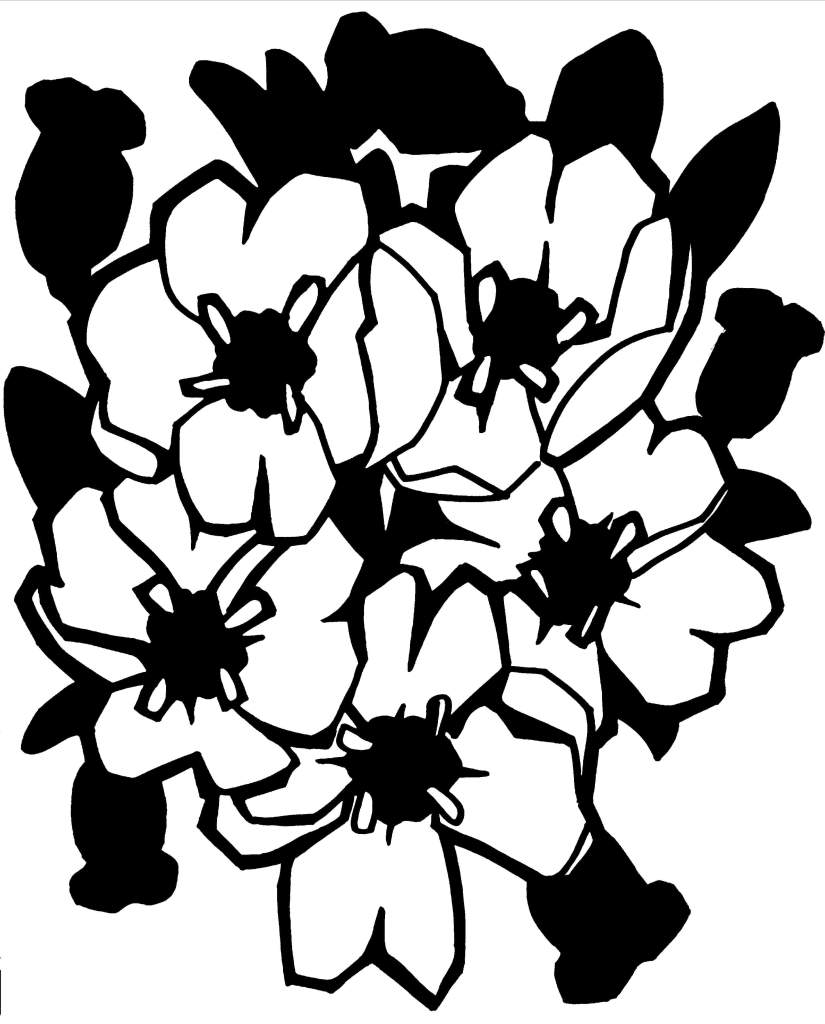
- The Apollyon Gasket symbolizes the Song of Seven, the Five Siblings, and the Three Lessons of the Warrior. The Gasket encapsulates the Song of Seven. The Gasket is the Song of Seven, encoded and fractal and easily transported. The Seven Petal Flower, like the Apollyon Gasket symbolizes the code of the Song of Seven. The Seven Petal Flower has been used longer within the Song, but sees greater use in artwork.
- The Greek/Cyrillic character Psi is used by the Song to represent the three roles within the independent adult and the sufficient community. The roles are the speaker (critical thinking), provider (self-sufficiency), and the knight (self-defense). Psi is also used to show that the community is healthiest when the civilized concept of the hierarchy is inverted, and there are more people who are powerful within the community and few how are powerless. The goal of a Singer community is have only the very sick, the very old, and the very young be have less power than any other individual, and even then to limit such vulnerability as much as possible. The Psi is also frequently referred to as the Wings of Destiny, as in the unknown greater purpose of the story itself.
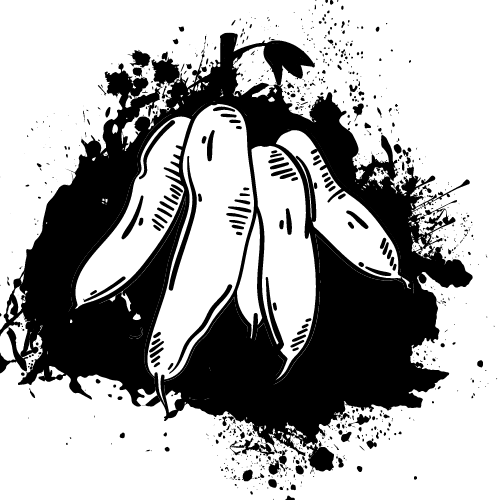
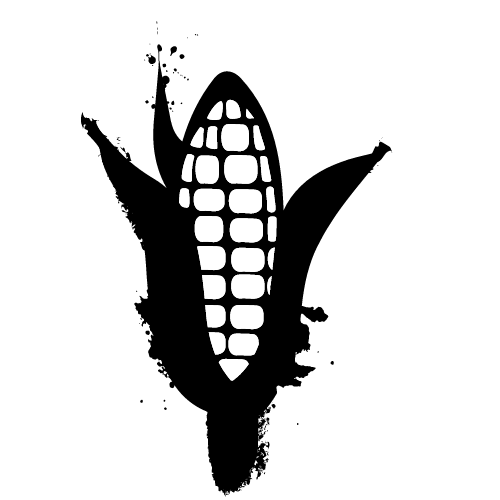
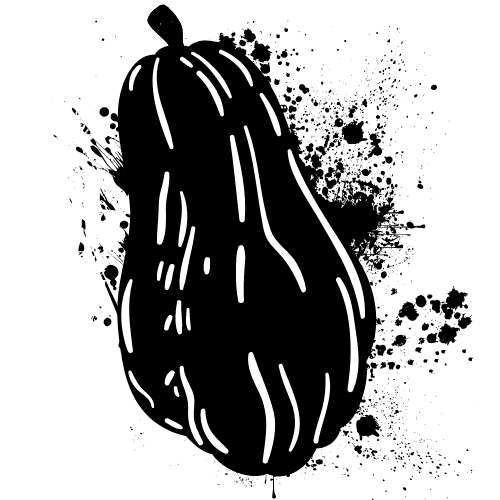
- Corn, along with Beans, Squash, Cassava, and Potatoes are symbols of independence. They are symbols of resistance to empire. These crops are essential to the survival of runaway tribes in the shatter zones at the edge of the empire’s ability to extend power. The three sisters: corn, beans, and squash are a core to independence, with corn providing starch and sugar, beans providing protein, and squash having a long storage life. Cassava and potatoes are honored for their ability to be hidden from requisition by officials.
- The Double Helix is the symbol of DNA, and as such is used by the song to represent the story of life on Earth and the history of humans as part of the community of life on earth. The Double Helix is also used to symbolize the Song’s respect for scientific progress and the scientific method. The double helix is also used a symbol of courage, symbolizing the individual being unafraid of the truth, even when it shatters long cherished illusions.
- The Fire, Flower, and Blade, typically drawn in a circular arrangement, are used by Singers to represent the three lessons of the Warrior. According to the Song of Seven, Warriors must learn to think for themselves, lest they be helpless against those who wish to think for them. Warriors must learn to provide for themselves, lest they be forced to beg sustenance from others. And warriors must be able to defend themselves, lest they lose what have provided for themselves to another willing to take it by force or guile. The fire signifies critical thinking. The flower signifies self sufficiency. The blade signifies self-defense.
- The Inverted Pentacle is used to represent the four greater realms of the Deeper Shadowlands and the final realm of Hollow Heart. The symbol was chosen for its deliberately provocative allusions to Satanism, because the Song of Seven is opposed to the compliance and subservience depended by Abrahamic religions and the hierarchical civilizations those religions support. The downward direction is also indicative of the Song’s general requirement that Singers descend, into earth like a seed and into themselves to confront their darkest self and master it.
- The Five Eyes of the Sleeper, tying back to the five siblings of the first tribe, this symbol is analogous to looking into the abyss. But unlike Nietzsche, who cautioned against it, the Song expects the Singer to battle with monsters both internal and external. The Warrior is expected to stare unflinching into toe abyss, and when the abyss stares back, the Warrior is taught to stand strong, to not blink. The eyes are also often used to symbolically represent the Sleeper or the Living Four as a whole. More rarely, the eyes will be used to represent the Elders as a whole or in general.
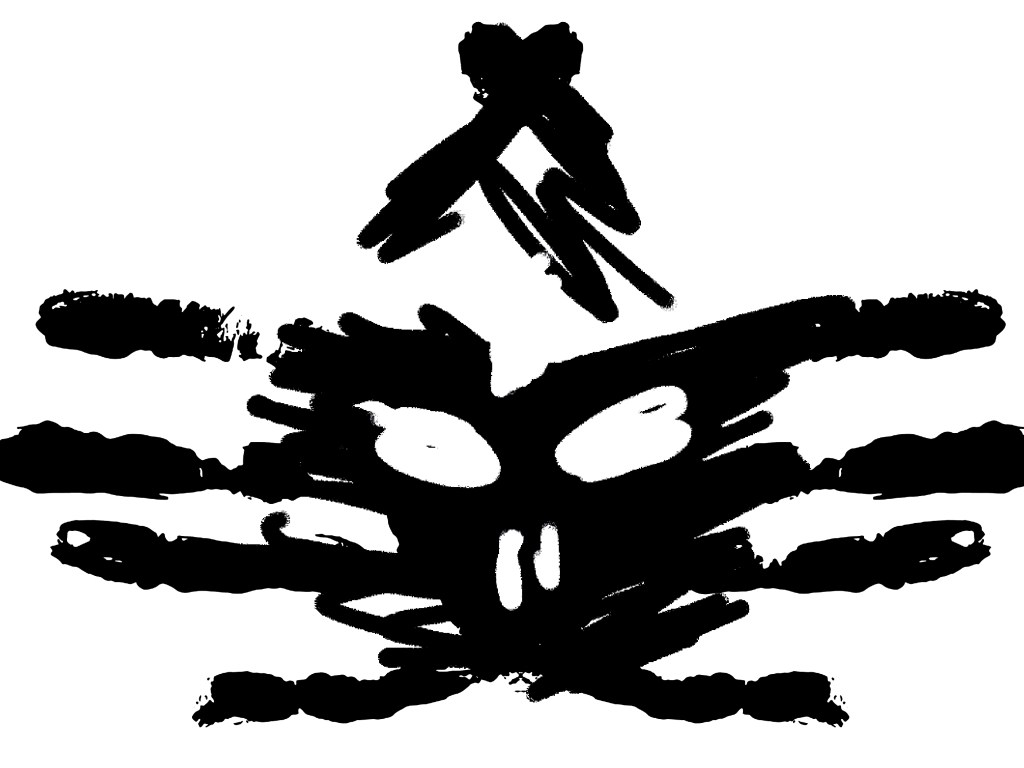
- The Firebird Mask and the Heart Mask are representations of the Firebird and the Mystery that the Firebird itself represents. The Firebird mask is the older symbol, and the Heart mask is often ringed with wings to create a Firebird Mask from the Heart Mask. Without the wings, the Heart Mask represents the fractal code of the Song of Seven, aligned with the deepest realm of the Shadowlands- the one known as Hidden Heart or Hollow Heart.
- The Three Arrows of Ohto County reference the three arrows of the World War Two era Anti-Fascist organizations (antifa). The Arrows are used to remind the Singers of the inherently anti-authoritarian, anti-hierarchical, and anti-fascist nature of the Song of Seven. The first arrow angling down is to remind the Singer that they must descend into the earth, as a planted seed. The second downward arrow is to indicate that the Singer must immerse themselves in the teachings, descending into the Shadowlands of the Story, as into Hell. The Diagonally angled longer arrow symbolizes the need to break through Imperial propaganda, and think laterally, questioning all precepts and beliefs- even these ones.
- The Crescent Sun is the symbol of the luni-solar year practiced by the Singers. The Luni-Solar year is essential to the mindset of Song of Seven, a view of time that is circular in nature rather than linear. The concept of time as circular is essential to understanding the Singer woldview. Singers view the concept of linear time as apocalyptic, and see practitioners of linear calendars as unknowingly engaged in a suicide death cult. The wheel turns, the wheel is meant to turn, and hammering the wheel of the year into a line is to crucify it and hope it will rise again.
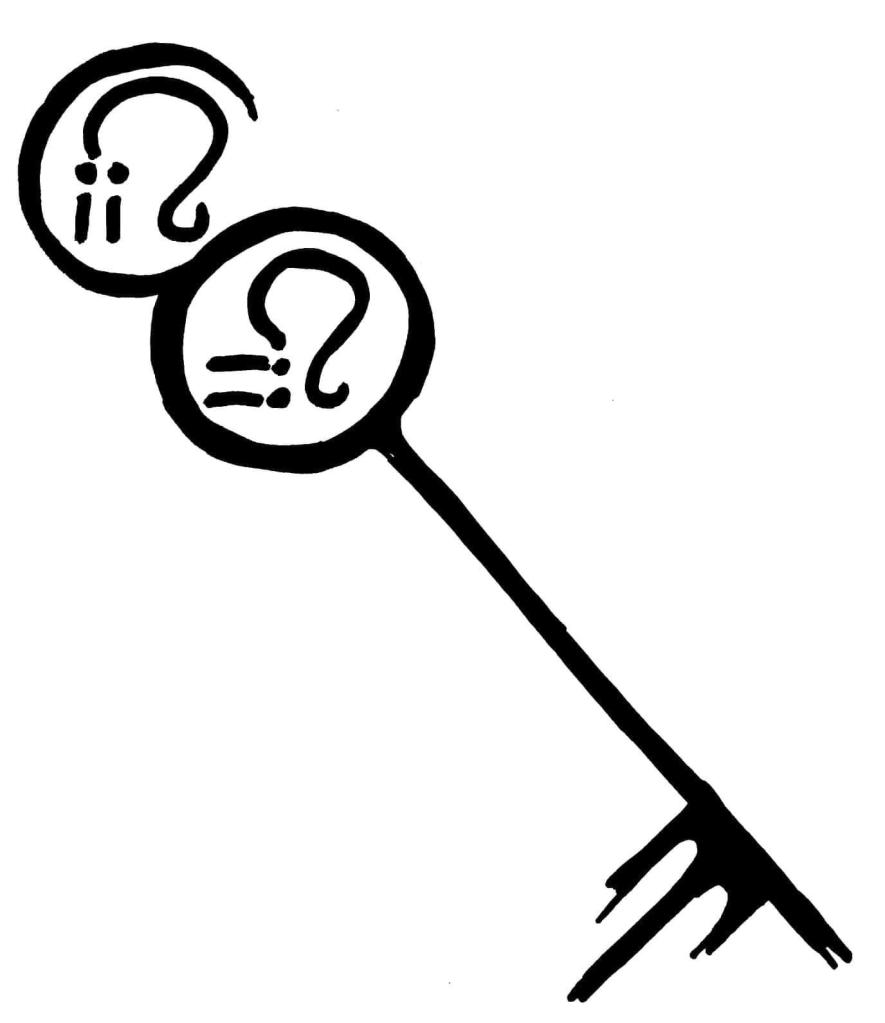
- The Key to Hell symbolizes the scientific method as a key out of ignorance. The Key to hell bears a fish hook on the hoop to signify that freedom can be painful to achieve. Further, the key is frequently depicted with the glyphs of The Sleeper and the Shepherd to signify change and enlightenment and their part in liberation.
- The Face of the Weaver serves two symbolic functions. First, the Weaver is the keeper of the story, the spinner or tales and the the face of the Weaver symbolizes the Weaver in its role as story keeper. Second, the Face of the Weaver symbolizes a set of sixteen core self-sufficiency skills that a warrior is expected to master on their path to becoming a warrior, and thus an adult. Singers will frequently tattoo the Face of the Weaver on their left shoulder.
- Poppies are respected as the most powerful natural pain medication know to humanity.
- Skulls are a frequent symbol used in Song of Seven art. The Skull is used in the manner of the art movement known as Momento Mori, and is meant to confront the viewer with their own mortality and move them to use their time to add to the story in ways which will cause them to live on in story past their own eventual death.







Color Symbolism
The Five Sacred Colors are Oxblood, Skobeloff, Vermillion, Saffron, and Magenta. Oxblood represents blood and lineage. Skobeloff represents the Treaty with the natural world, the forest and the sea and so forth. Vermillion represents the flame. Saffron represents the harvest. Magenta represents compassion and restorative justice.
White and Black together represent absolutism and the ideology of the Hungry Empire and the Locust King. Black and White, especially in a striped or chessboard configuration represent the black and white morality of the Hungry Empire.
Grey represents entropy, mindless order, heat death, the opposite of the Flame. The Grey is of course represented by the color grey. The result of these color associations means that depictions of the Hungry Empire tend to be strongly contrasted black and white artwork with a washed grey background.
Red and Black together represent mastery, and the inward journey that warriors are expected to undertake.
Green represents death and rebirth, as evidenced by the prominent grim reaper figure in the Song being literally named: The Little Green Man. Green is often paired with black in such illustrations.
Gold and Silver represent corruption and emptiness. Coin and currency is symbolic of corruption in the Song. Taxation and commerce are looked upon as covert forms of slavery in the Song and the affiliated metallic colors are seen corrupt and hollow and indicative of slavery and abusive power structures.
Corn and Other Horticultural Symbols
Corn, along with beans, squash, cassava, and potatoes are symbols of independence. They are symbols of resistance to empire. These crops are essential to the survival of runaway tribes in the shatter zones at the edge of the empire’s ability to extend power. The three sisters: corn, beans, and squash are a core to independence, with corn providing starch and sugar, beans providing protein, and squash having a long storage life. Cassava and potatoes are honored for their ability to be hidden from requisition by officials.
Perennial plants feature heavily in the gardens of Freepath adherents and Singers. Perennial leafy greens include lovage, perennial goosefoot (Good King Henry), nutty Sylvetta arugula (Diplotaxis muralis), common sorrel, and Monk’s Rhubarb (Rumex patientia). The leaves of perennial salad greens are used to symbolize perseverance and abundance, and frequently feature as border patterns in art and textiles.
Flowers
Poppies are respected as the most powerful natural pain medication know to humanity. The Poppy represents healing due to its anesthetic properties. The Poppy represents mourning, due to its association with the wars of empire. And the poppy represents temptation, due to its addictive nature.
The Lotus, both the Indian Lotus Flower and the American Lotus Flower are symbolic of initiation into Mystery.
The Potato Flower is symbolic of resistance to Empire. Because potatoes, being root vegetables, must be dug up to be harvested. This allows communities to effectively hide their crops from imperial forces.
The Rose, especially the Sweetbriar Rose, The Dog Rose, the Star Rose, the Baja littleleaf Rose, and the Wood Rose, are used as tactical area denial barriers in tribal outposts- with the thorns of the roses being used to prevent access by outside groups to sensitive areas. The Sweetbriar and Dog Roses are also used for rose water, rosehip tea, and rose jams. As a result roses are used to symbolize both self defense and self sufficiency. The flower in the Fire, Flower, and Blade is frequently a rose, often a Dog Rose. The Cabbage Rose is frequently used for perfume by Singers. Because Singers tend to favor pink roses, the rose is also frequently used to represent justice (as magenta is also used to represent justice).
Symbols of the Hungry Empire
The Hungry Empire is associated with many symbols, which can be grouped into chunks. Symbolism is often related to totalitarian agriculture. Symbolism is often related to monarchy and royalty. Symbolism is often related to unsustainable energy, fossil fuels, nuclear, deforestation and other exploitative civilizational practices.
Crowns and Halos
Crowns and halos are associated with the myth of supremacy. They are used to symbolize oppression and authoritarianism.
Locusts and Grasshoppers
Locusts spread and devour until the land cannot support them, and then they die. So it is with the Hungry Empire and the locust spirit. The Locust symbolizes the insatiable hunger of the Empire and the Locust King.
Oil and Coal
Fossil fuels are used to symbolize corruption and the corrupting influence of the Hungry Empire.
Grains: Wheat, Rice and Oats
Wheat, rice, oats and most other grains are symbols of the the cultural hegemony and monotonous conformity of the Hungry Empire.
Scythes and Plows
Scythes, plows and other bladed farm tools are used to symbolize the domination and abuse.
Recommended Reading
- Cultish: The Language of Fanaticism, by Amanda Montell
- Actionable Gamification, by Yu-kai Chou
- Influencer, by Kerry Patterson, et al.
 Professor Harbinger's School for Villains